Guide

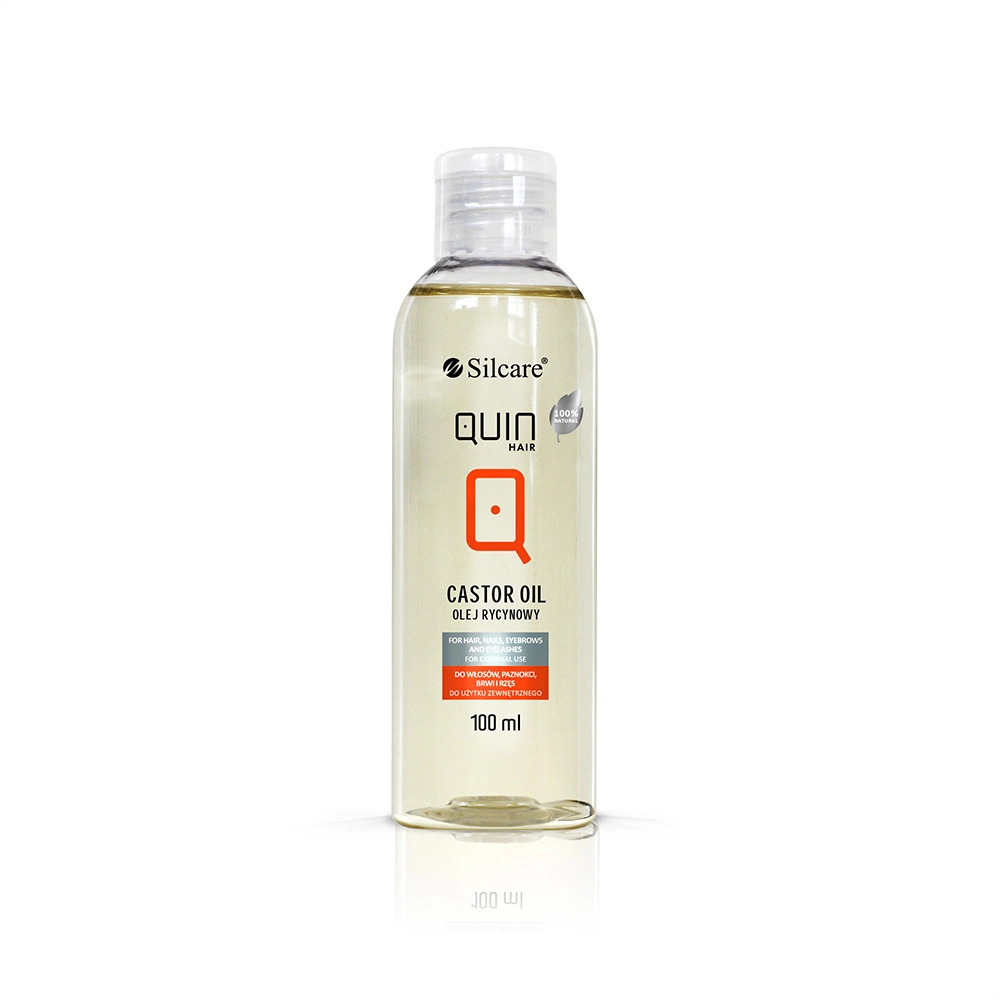
One product, many uses and a simple formula based on an ingredient of natural origin. QUIN Castor Oil primarily intensively conditions dry areas of the skin, helps soften them, smooths the hair and cares for its ends. What is more, it improves the appearance of the cuticles around the nails and gives eyebrows and eyelashes a more well-groomed look. Its thick, rich consistency is especially suitable for caring for dry areas and parts of the skin prone to discomfort.
The oil is obtained by cold pressing. You can use it on its own, add it to masks and conditioners or combine it with a lighter oil. It is a versatile cosmetic for people who appreciate minimalist care and want to use one product for the whole body.
Castor oil is obtained from the seeds of the castor bean plant, Ricinus communis. Its characteristic thick consistency is due to its high content of ricinoleic acid. This fatty acid is responsible for many of the oil's functional properties.
In cosmetics, castor oil is valued primarily as an emollient. It creates a delicate layer on the surface of the skin and hair that:
This does not mean that it moisturises by supplying water to the skin. Its main role is to care for the skin by providing an emollient effect and helping protect it against excessive moisture evaporation.
The properties of castor oil make it suitable for caring for different areas of the body.
When used regularly, castor oil:
The oil has a rich, sticky consistency, so a small amount is usually enough. When using it on hair or larger areas of the body, it is worth combining it with a lighter oil or adding a few drops to another cosmetic product.
Castor oil for hair is particularly suitable when the strands are dull, rough, dry or lacking shine. It coats the hair with an emollient layer that helps smooth it, reduce frizz and protect the ends against further dryness.
You can use it before washing as part of an oiling treatment, add it to a mask or apply it directly to the ends. Due to its thick consistency, it is best to use only a small amount. Too much product may weigh the hair down and make it more difficult to wash out thoroughly.
It is also worth distinguishing the conditioning effect from commonly repeated claims about hair growth. The oil may improve the appearance and condition of the hair, but it should not be treated as a proven product for accelerating growth or as a treatment for excessive hair loss.
Castor oil for eyelashes and eyebrows is a popular part of an evening care routine. Applied in a small amount, it coats the hairs, smooths them and adds shine. It can also care for dry skin underneath the eyebrows. The effect of fuller-looking eyebrows and eyelashes comes from smoothing, adding shine and reducing dryness and brittleness.
Take particular care during application. The product should not come into contact with the eyes. Apply only a minimal amount with a clean brush directly to the hairs, avoiding the waterline.
Castor oil for the face can be used mainly as a targeted treatment for dry and rough areas of the skin. It helps condition, smooth and reduce moisture loss. It can also be used as an ingredient in oil blends or added to a cream.
Due to its thick, rich consistency, not every skin type will tolerate application over the entire face. For oily, acne-prone or clog-prone skin, it is best to start with a small amount applied to a limited area.
Castor oil is not a treatment for acne, pigmentation or wrinkles. It can support skincare by providing an emollient and smoothing effect, but it should not replace products selected for a specific skin concern.
Perform a patch test on a small area of skin before first use.
Dry, peeling cuticles can make even a carefully finished manicure look less neat. Castor oil helps soften, condition and smooth them. Massaged into the nail plate, it gives the nails shine and a well-groomed appearance.
It is worth using the product after removing nail polish, between manicures or in the evening as an addition to hand care. You can also mix a few drops with hand cream and apply a thicker layer before bedtime.
The oil does not physically rebuild an already damaged part of the nail, but regular care helps protect the nail plate and cuticles against further dryness.
Applying castor oil to the navel, sometimes called “navel oiling” or “navel pulling”, has become popular on social media. Supporters of this method claim that it can reduce bloating, improve digestion, support weight loss, “detoxify the body” or regulate hormones.
However, there is no reliable scientific evidence supporting these claims. The navel is a scar left after the umbilical cord, not a special point that transports oil to internal organs. Applying a cosmetic product there may condition the skin in the same way as applying it to another area of the body, but there is no confirmed effect on the digestive system, liver, hormones or body weight.
QUIN Castor Oil is a cosmetic product intended for external use. It should not be ingested or used as a home remedy for digestive complaints.
Castor oil comes from the seeds of the castor bean plant, and its main characteristic component is ricinoleic acid. Available safety assessments consider Ricinus communis seed oil to be safe as a cosmetic ingredient when used as intended, although – like other ingredients – it may cause irritation in some people. Claims about improving digestion, reducing bloating or promoting weight loss by applying the oil to the navel are not supported by scientific studies.
The application method should be adapted to the area being cared for. Because the oil is concentrated and thick, start with a small amount.
For hair: Rub a small amount between your hands or combine it with a lighter oil. Apply to the lengths and ends before washing. Leave on for approximately 30–60 minutes, then emulsify thoroughly with conditioner and wash the hair with shampoo. Use as a hair oiling treatment once a week or less often, depending on your hair's needs and response.
For facial skin: Warm one drop between your fingers and gently pat it into slightly damp skin or add it to a portion of cream. Start by applying it locally to dry areas. Avoid the eye area and do not apply to irritated skin.
For nails and cuticles: Apply one drop to the nails and cuticles, then massage thoroughly. Use in the evening or whenever the area around the nails feels dry.
For eyebrows and eyelashes: Apply a minimal amount to a clean brush. Distribute over the eyebrows or directly onto the eyelash hairs, keeping away from the waterline. Do not allow the product to come into contact with the eyes.
Before first use, perform a patch test on a small area of skin. Do not use the product on damaged or severely irritated skin. Avoid contact with the eyes. If redness, burning or itching occurs, discontinue use.
For external use only.
